

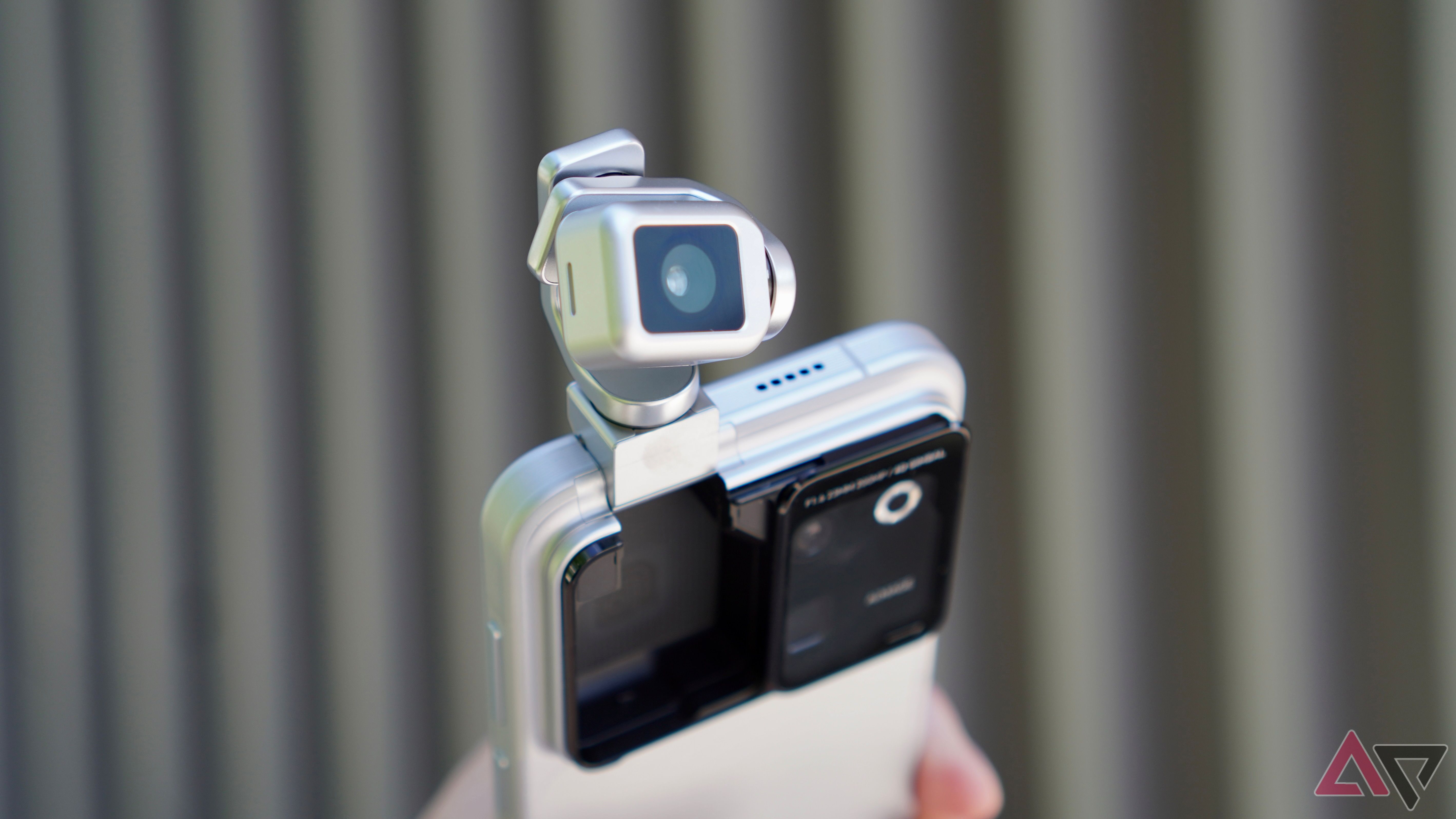
I Used the Honor Robot Phone: Proof That Daring Smartphone Design Isn't Dead in 2026
Let’s be honest for a moment: the modern smartphone market has grown painfully predictable. If you walk into a store today, you are met with a sea of glass-and-aluminum rectangles. Sure, camera bumps get slightly larger, processors tick a bit faster, and titanium finishes add a touch of luxury, but the fundamental soul of mobile innovation feels heavily constrained by safe, corporate risk-management. Manufacturers know what sells, and in 2026, sticking to the tried-and-true formula keeps the corporate ledger safely in the black. Risk is expensive. Boring is profitable.
Or at least, that was the prevailing industry narrative until I got my hands on the new Honor Robot Phone.
This device shatters the monotony of the current tech landscape. It is loud, unapologetically weird, and fundamentally challenges how we interact with our pocket technology. Spending time with this engineering marvel proved one vital truth: daring smartphone design can still exist in 2026—if a brand is brave enough to completely throw out the rulebook.
The Sea of Conformity: Why Smartphone Design Stalled
To truly appreciate what Honor has achieved with the Robot Phone, we need to address the elephant in the room. Over the last few years, the smartphone industry has matured into a mature utility market, much like home appliances. Consumers treat phones less like gadgets to geek out over and more like digital wallets and camera viewfinders.
Because profit margins depend heavily on mass-market appeal, research and development departments have largely abandoned wild conceptual sketches in favor of safe iterations:
- Refining the curved versus flat display debate
- Shaving millimeters off bezel thickness
- Upgrading megapixel counts on sensors nobody fully utilizes
- Iterating on folding screens that, while impressive, still adhere to traditional book-style or flip-phone form factors
Whenever a company attempts something genuinely unconventional—think modular phones, weird physical shapes, or radical camera mechanics—it is usually met with skepticism, high price tags, and rapid discontinuation. Consequently, the industry settled into a comfortable, albeit boring, stasis. That is, until Honor decided to inject a massive dose of sci-fi reality into the mix.
Enter the Honor Robot Phone: A Sci-Fi Vision Realized
When you first pull the Honor Robot Phone out of its box, your brain struggles to categorize it. Is it a smartphone with an attachment? Is it a miniaturized piece of robotics that happens to make phone calls? The answer is a fascinating blend of both.
The device features an integrated, motorized mechanical apparatus that actively shifts, moves, and reacts to your commands and environment. When powered off, it maintains a relatively sleek profile, but boot it up, and the device literally comes alive. The mechanical module adjusts angles, tracks movement, and fundamentally alters the physical ergonomics of the device based on what you are doing.
Watching the mechanical components glide with silent, high-precision smoothness feels less like using a consumer electronics product and more like holding a piece of advanced technology straight out of a cyberpunk epic. Honor hasn't just built a phone; they have built a companion.
Real-World Utility: Is a Robotic Phone Actually Practical?
Skeptics will immediately look at a device like the Honor Robot Phone and ask the ultimate tech-reviewer question: Is this just a gimmick?
It’s a fair critique. The history of tech is littered with flashy innovations that looked incredible on a presentation stage but proved wildly impractical during a Tuesday morning commute. However, spending extended time with the Honor Robot Phone reveals genuine, thought-out use cases for its bizarre physical design:
- Next-Level Content Creation: The motorized mount allows the phone to track your face or stabilize shots dynamically without needing an external gimbal. For solo creators, vloggers, and streamers, this is an absolute game-changer.
- Immersive Video Calls: Instead of propping your phone up against a coffee mug or buying a separate desktop stand, the phone adjusts its own elevation and pitch to keep you perfectly framed during Zoom or FaceTime calls.
- Active Thermal Management: The internal mechanical shifts aren't just for show; they help expose hidden vents and optimize airflow during heavy gaming sessions, keeping thermal throttling at bay.
- Ambient Interaction: The phone reacts to incoming notifications with subtle physical movements, giving notifications a tangible, physical dimension in an age of endless digital noise.
Of course, it’s not without compromises. The added mechanical complexity means the device is heavier than your standard flagship, and you do have to wonder about the long-term durability of moving parts in a device that routinely gets tossed onto couches, shoved into pockets, and potentially dropped on concrete. Yet, these are risks worth taking in the name of progress.
The Psychological Impact of Daring Hardware
Beyond the spec sheet and the mechanical wizardry, using the Honor Robot Phone changed how I felt about technology. For a long time, unboxing a new flagship felt routine. I knew where the buttons would be, how the cameras would perform, and what the user experience would look like.
The Honor Robot Phone brought back that long-lost child-like wonder of unboxing a gadget. People in coffee shops literally stopped to stare when the device adjusted itself on my table. In a world where every phone looks identical from three feet away, having a device that sparks genuine curiosity and conversation is refreshing beyond measure.
It proves that consumers still crave novelty. We are tired of minor camera bumps and incremental CPU bumps marketed as "revolutionary." We want to be surprised. We want hardware that pushes boundaries.
What This Means for the Future of Mobile Tech
Will every phone manufacturer suddenly pivot to making robotic, moving smartphones? Almost certainly not. The engineering costs are staggering, the manufacturing yields are low, and the mass-market consumer base will still default to the safe, reliable slab of glass.
However, that is completely missing the point. The importance of the Honor Robot Phone doesn't lie in its potential to capture 50% of market share. Its true value lies in its halo effect.
By proving that daring design is still possible in 2026, Honor is sending a clear message to the entire industry: stop playing it safe. They are pushing competitors back to the drawing board, forcing designers to look beyond the flat glass screen and imagine what else a pocket computer could be. Just as the first foldable phones were written off as fragile toys before maturing into a legitimate market category, radical mechanical concepts like this lay the groundwork for future form factors we haven't even dreamed of yet.
The Verdict: A Triumph of Imagination
The Honor Robot Phone is undeniably weird, brilliantly ambitious, and perhaps a little mad. It represents a level of risk-taking that most multi-national tech conglomerates have completely purged from their corporate culture in favor of guaranteed quarterly profits.
By daring to build something completely out of left field, Honor has breathed new life into an industry that desperately needed a kick start. It proves that innovation isn't dead—it was simply waiting for someone brave enough to wake it up. If 2026 is the year we start seeing brands take creative risks again, the Honor Robot Phone will be remembered as the spark that started the fire.





No comments:
Post a Comment